
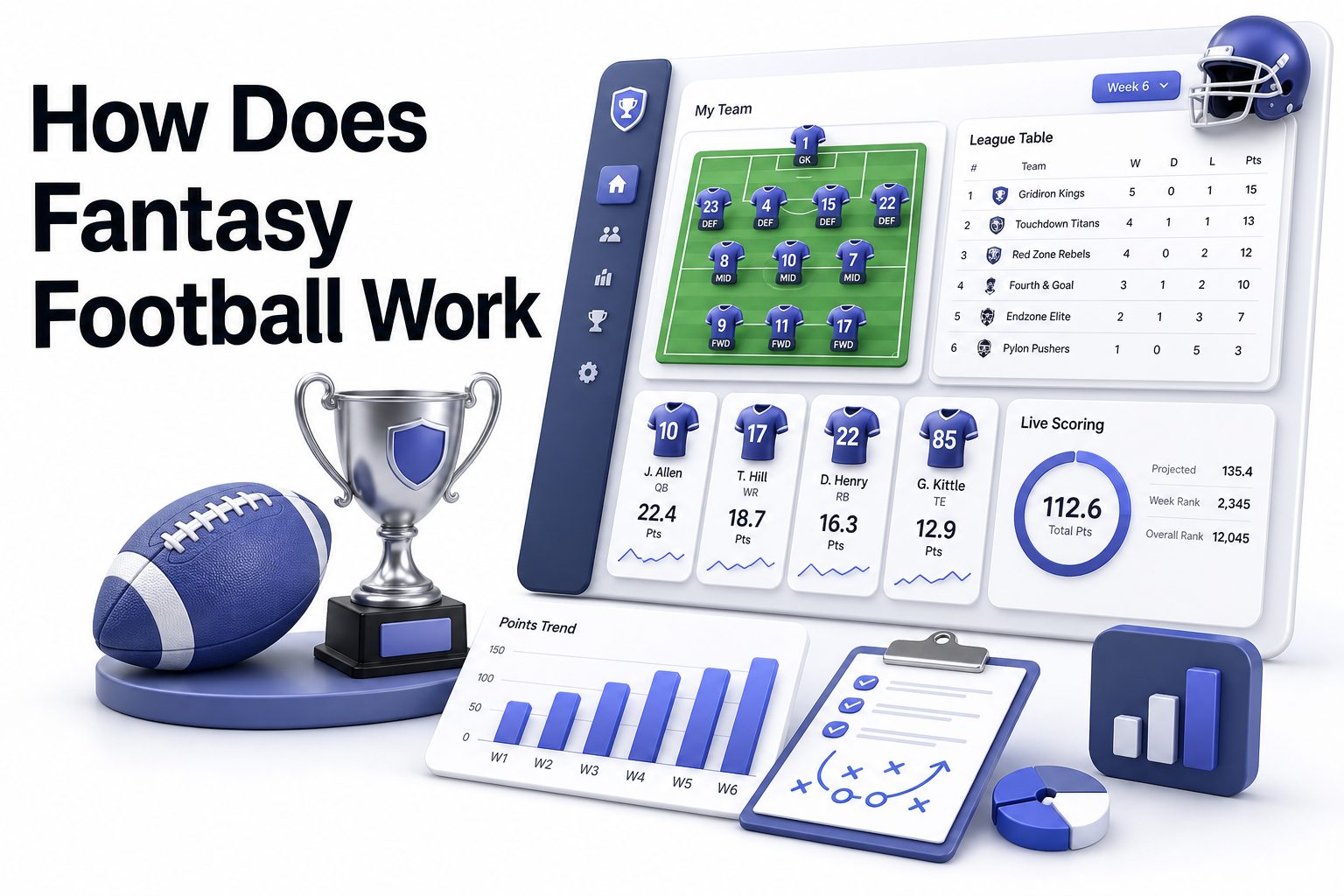
Fantasy football is a game where real NFL players become part of your personal team. You draft players, set weekly lineups, and earn points based on their real performances during NFL games throughout the season.
The goal is simple: score more fantasy points than your weekly opponent. A quarterback’s passing yards, a running back’s touchdowns, or a wide receiver’s receptions can all help your fantasy team win matchups.
Most fantasy leagues run during the NFL regular season. Friends, coworkers, or online players compete in a shared league, manage rosters, make lineup decisions, and try to reach the fantasy playoffs.
The Basic Idea Behind Fantasy Football
Fantasy football turns NFL watching into a strategy game. Instead of cheering only for one team, you follow individual players across many teams because their stats directly affect your fantasy score.
Each fantasy team has a roster with positions such as quarterback, running back, wide receiver, tight end, kicker, and defense. Some leagues also include flex spots, which allow more lineup flexibility.
Every week, your starters collect points while bench players usually do not. Choosing the right starters matters because one smart lineup decision can change the result of a close matchup.
Key fantasy football terms
Roster: The full group of players on your fantasy team.
Starter: A player placed in your active lineup for the week.
Bench: Players kept on your team but not used in the active lineup.
Waivers: The system used to add available players after games begin.
Trade: A deal where managers exchange players.
Flex: A lineup spot that can usually hold a running back, wide receiver, or tight end.
Fantasy Drafts
The draft is where every manager builds the first version of their team. Each person selects NFL players one at a time until every roster spot is filled, including starters and bench players.
A common format is the snake draft. In this setup, the draft order reverses each round, so the manager picking last in round one picks first in round two.
Some leagues use auction drafts instead. Managers receive a budget and bid on players, which creates a different style of strategy where every player is technically available to every team.
Draft Strategy
Good draft strategy balances talent, role, and reliability. Star players matter, but volume is often just as important because players with steady touches and targets usually produce more consistent weekly scores.
Running backs and wide receivers are often drafted early because they fill multiple roster spots. Quarterbacks can be valuable, but in many leagues, there are enough usable options to wait a few rounds.
Depth also matters during the draft. Injuries, bye weeks, and poor performance happen every season, so smart managers build a bench with upside instead of selecting only familiar names.
Fantasy Football Scoring
Fantasy points are based on real NFL statistics. Passing yards, rushing yards, receiving yards, catches, touchdowns, sacks, interceptions, and field goals can all create points depending on league settings.
The most common formats are standard, half PPR, and full PPR. PPR means points per reception, so players earn extra value when they catch passes, even for short gains.
Scoring settings affect player value. A possession receiver may be stronger in PPR, while a touchdown-heavy running back may carry more value in standard scoring formats.
Common scoring examples
Passing touchdown: Usually worth 4 or 6 points.
Rushing touchdown: Usually worth 6 points.
Receiving touchdown: Usually worth 6 points.
Reception: Worth 0, 0.5, or 1 point depending on format.
Interception thrown: Usually costs 1 or 2 points.
Field goal: Often worth 3 to 5 points based on distance.
Roster Positions
Most fantasy teams use one quarterback, two running backs, two wide receivers, one tight end, one flex, one kicker, and one team defense. Some leagues adjust these spots for deeper competition.
The quarterback often scores many points, but only one usually starts each week. Running backs and wide receivers are harder to replace because most lineups need several of them.
Tight end can be difficult because only a few players produce elite numbers. Managers who miss out on a top option often rotate players based on matchups and weekly opportunity.
Setting Weekly Lineups
Each week, managers choose starters before NFL games begin. Once a player’s real game starts, that player usually locks into place and cannot be moved until the next scoring period.
Lineup choices should account for matchups, injuries, weather, projected role, and recent usage. A talented player may still be risky if his workload has declined or his quarterback is injured.
Bye weeks are also important. Every NFL team has one week off during the season, and fantasy managers must replace any players who are not playing that week.
Waivers And Free Agents
The waiver wire is where managers find players who were not drafted or were dropped by another team. It is one of the most important parts of fantasy football success.
Breakout players often appear on waivers early in the season. Injuries, depth chart changes, and unexpected role shifts can create valuable starters from players nobody drafted.
Free agents are available players who can be added without a waiver claim. League rules decide when a player goes through waivers and when they become freely available.
Trades Between Managers
Trades allow managers to improve their teams by exchanging players. A strong trade usually helps both sides by solving different roster problems, such as depth, injuries, or positional weakness.
Value is not always equal on paper. One team may trade two solid players for one star because they need elite scoring, while the other team needs more weekly starters.
League managers usually review trades for fairness. A trade should not be blocked simply because one side looks smarter, but collusion or clearly harmful deals can damage league balance.
Smart trade habits
Trade from depth rather than weakness.
Check upcoming bye weeks before accepting a deal.
Compare rest-of-season value, not only last week’s score.
Avoid overreacting to one bad game.
Consider schedule strength during fantasy playoff weeks.
Make offers that solve a real need for the other manager.
Head To Head Matchups
Most leagues use head-to-head scoring. Each team faces one opponent every week, and the team with more fantasy points earns a win in the league standings.
This format creates weekly pressure because timing matters. A team can score well and still lose if the opponent has an even bigger week, which adds drama throughout the season.
Standings usually decide playoff seeding. Wins, losses, total points, and tiebreakers determine which teams qualify when the regular season ends and the fantasy postseason begins.
Fantasy Playoffs
Fantasy playoffs usually happen during the final weeks of the NFL regular season. The top teams in the league standings qualify, then compete in elimination matchups until a champion is crowned.
Playoff timing is important because NFL teams may rest starters late in the season. Many fantasy leagues end before Week 18 to avoid unpredictable playing time for real-life playoff teams.
Managers should plan ahead before playoffs begin. Strong bench depth, favorable schedules, and backup running backs can become valuable when injuries or changing roles affect star players.
League Formats
Redraft leagues are the most common format. Every season begins with a new draft, and managers start fresh without keeping players from the previous year’s roster.
Keeper leagues allow managers to retain a small number of players each season. This adds long-term planning because young breakout players can become more valuable over several years.
Dynasty leagues go even deeper. Managers keep most or all players year after year, draft rookies, manage future picks, and build teams with a much longer timeline.
Public And Private Leagues
Private leagues are usually created by friends, family members, coworkers, or online communities. These leagues often have custom rules, shared traditions, and more active communication between managers.
Public leagues are open to anyone on fantasy platforms. They are useful for beginners who want to learn the game quickly without needing to organize a full group.
Private leagues often create a stronger experience because managers stay engaged. A good commissioner, clear rules, and active communication can make the season smoother and more enjoyable.
For deeper roster planning, read our fantasy football draft strategy guide before your next league begins.
Commissioner Duties
The commissioner manages league settings, scoring rules, draft time, roster limits, trade review rules, and playoff structure. This role helps keep the league organized from draft day through championship week.
A good commissioner sets rules before the draft. Clear rules reduce conflict later, especially around trades, inactive managers, waiver settings, and payout structures in competitive leagues.
Commissioners should avoid changing major rules during the season unless the league agrees. Consistency matters because managers make draft, waiver, and trade decisions based on the original settings.
Beginner Mistakes
Many beginners draft only players from their favorite NFL team. It is natural to like familiar names, but fantasy success requires value across the entire league.
Another mistake is ignoring bye weeks and injuries. A strong roster can lose quickly if multiple starters are unavailable and the manager has not prepared replacement options.
Some managers chase last week’s points too often. Recent performance matters, but role, usage, matchup, and long-term opportunity usually give a clearer picture of future fantasy value.
Helpful beginner habits
Check injury news before lineups lock.
Review player usage, not only total points.
Keep bench players with clear upside.
Avoid carrying too many kickers or defenses.
Use waivers every week with a purpose.
Stay patient with proven players after one poor game.
Research And Player Rankings
Player rankings help managers compare options, especially during drafts and weekly lineup decisions. Rankings are not perfect, but they provide a useful starting point for evaluating players.
Projections estimate how many points a player may score in a given week. They should guide decisions, but managers should still consider injuries, matchups, weather, and team news.
It helps to use several sources instead of relying on one list. Different analysts may value players differently, and comparing opinions can reveal risk, upside, and hidden opportunities.
Weekly Management
Fantasy football rewards active management. The draft matters, but the best teams usually improve throughout the year by making smart waiver claims, trades, and lineup adjustments.
Managers should check their teams throughout the week. Injury reports, practice participation, depth chart changes, and coaching comments can all affect whether a player is a safe starter.
Sunday mornings are especially important because inactive lists are released before games. A late scratch can ruin a lineup if the manager does not replace the player in time.
For more weekly help, visit our fantasy football waiver wire tips guide.
Why Fantasy Football Is Popular
Fantasy football makes NFL games more engaging because every matchup can affect your team. Even a regular game between unfamiliar teams may matter if one of your fantasy players is involved.
It also adds friendly competition. Leagues create weekly conversations, trade talks, rivalries, and playoff races that keep people connected throughout the football season.
The game is approachable but deep. Beginners can learn the basics quickly, while experienced managers can study advanced stats, roster construction, and long-term strategy for a stronger edge.
Conclusion
Fantasy football works by turning real NFL player performance into points for your personal team. You draft players, set lineups, manage waivers, make trades, and compete in weekly matchups across the season.
Success comes from combining preparation with weekly decisions. Drafting well helps, but active managers often gain an advantage by following news, reacting to injuries, and finding useful players before others do.
If you are learning how does fantasy football work, start with a simple redraft league, know your scoring rules, stay active each week, and focus on steady improvement instead of perfect decisions.
FAQ
How long does a fantasy football season last
Most fantasy football seasons follow the NFL regular season. Leagues usually start in Week 1 and end with fantasy playoffs around Weeks 15 to 17, depending on league settings and playoff structure.
Can beginners play fantasy football easily
Yes, beginners can play without advanced football knowledge. Most platforms provide rankings, projections, and lineup tools. Learning the basics of scoring, waivers, and weekly lineups is enough to start confidently.
What is the best fantasy football format
Redraft is usually best for beginners because every season starts fresh. Keeper and dynasty leagues are better for experienced managers who enjoy long-term planning, rookie drafts, and managing future player value.
How many players are on a fantasy roster
Roster size depends on league settings, but many teams have around 15 to 18 players. This usually includes starters, bench players, a kicker, and one team defense or special teams unit.
Do fantasy football players win money
Some leagues have entry fees and prize pools, while others are free and played for fun. Money rules should be clear before the draft so every manager knows the structure.
0 Comments