
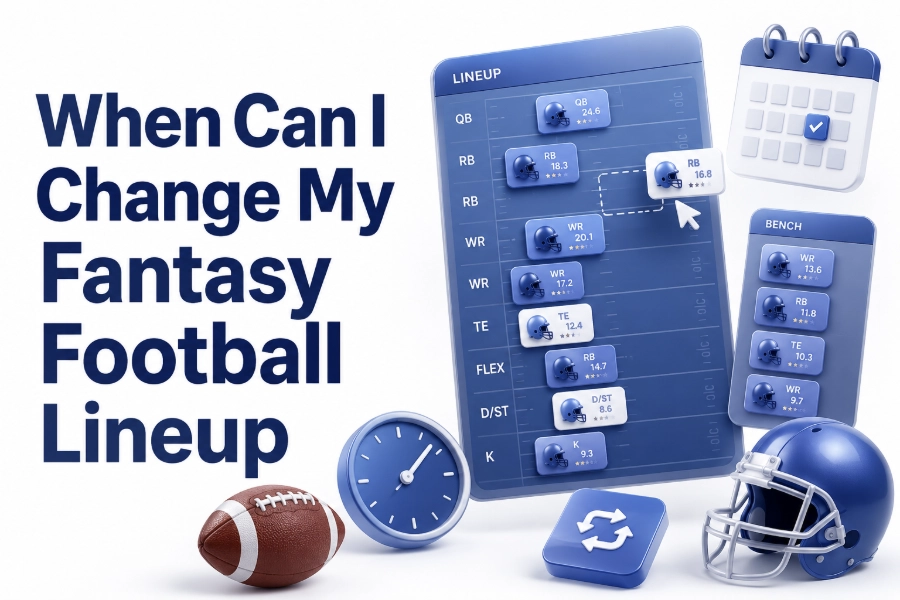
Fantasy football lineup changes depend on your league platform, scoring format, and lineup lock settings. In most leagues, you can edit players until their real NFL game begins. Once a player’s game kicks off, that player usually locks into his selected spot.
The main keyword, when can i change my fantasy football lineup, matters because timing affects weekly results. A smart manager checks kickoff times, injury reports, weather, and late roster news before finalizing starters. Small lineup moves can swing close matchups.
Most platforms allow changes throughout the week, including after Thursday games, as long as the specific player has not started playing. This means Sunday and Monday players can often be moved even after earlier games have finished.
Lineup Lock Basics
Lineup lock is the rule that freezes a player in place once a certain deadline arrives. The most common setting is individual game lock, where each player locks only when his own NFL game begins. This gives managers flexibility across the full week.
Some leagues use full roster lock, where the entire lineup freezes when the first game of the scoring period begins. This setting is less common in casual fantasy football, but it appears in certain custom leagues and tournament-style contests.
Commissioner settings matter more than general advice. ESPN, Yahoo, Sleeper, NFL Fantasy, and CBS can all support slightly different rules. Before Sunday morning, review your league settings so you know exactly when each player becomes locked.
Key lineup timing points
- Thursday players usually lock at Thursday kickoff only
- Sunday early players lock when their games begin
- Sunday late players can often be changed before late kickoff
- Sunday night players usually remain editable until kickoff
- Monday night players often stay movable until Monday kickoff
- Bench players may lock once their own games begin
- Full roster lock leagues freeze every lineup spot earlier
Game Time Lock
Game time lock is the most flexible and common fantasy football setting. Under this rule, a player becomes locked only when his real NFL game starts. Other players in your lineup remain editable until their own kickoff times arrive.
For example, if you start a running back on Thursday night, that player locks at Thursday kickoff. Your Sunday and Monday players remain available for changes. This gives you time to react to injuries, inactive lists, and depth chart updates.
Game time lock rewards active management. You can place early-game players in fixed lineup spots and leave flexible players for later windows. This approach helps when uncertain players are listed as questionable or game-time decisions.
Full Lineup Lock
Full lineup lock freezes your entire lineup at one deadline, often the first kickoff of the fantasy week. If Thursday Night Football begins at 8:15 p.m. Eastern, every starter and bench decision may become final at that moment.
This format places more pressure on early-week planning. You cannot wait for Sunday inactive reports or late injury updates if your league uses a full roster lock. Managers in these leagues often favor healthier, safer starters over uncertain upside plays.
Full lineup lock is less forgiving, but it creates a level playing field for managers who cannot monitor news all weekend. If your league uses this format, set your lineup well before Thursday kickoff and avoid relying on late injury clarity.
Thursday Night Football
Thursday games create the first major lineup deadline of the fantasy week. Players from those teams usually lock once the game begins. If you start a Thursday player, that lineup spot becomes fixed, even while the rest of your roster remains editable.
A common mistake is placing a Thursday player in the flex spot. If that player locks in the flex, you lose flexibility for Sunday and Monday decisions. Whenever possible, place Thursday players in their specific RB, WR, or TE slots.
This small habit helps later in the week. If injury news changes your options, the flex spot can accept multiple positions. For deeper weekly planning, see our fantasy football waiver wire strategy guide for roster moves that support better lineup timing.
Sunday Morning Changes
Sunday morning is the busiest lineup window in fantasy football. Most injury reports, beat writer updates, and inactive lists become useful during this time. Players in the early games usually lock around 1:00 p.m. Eastern, depending on the schedule.
Inactive lists are typically released around 90 minutes before kickoff. That timing gives managers a final chance to remove injured or inactive starters. Checking official team reports matters more than relying on old projections from earlier in the week.
When several players are questionable, prioritize clarity. A healthy starter in an early window can be safer than a late-window player with no backup plan. Good Sunday management balances upside with the risk of taking a zero.
Sunday Late and Night Games
Late Sunday games give managers extra time to make decisions, but they also create risk. If a questionable player starts at 4:05 or 4:25 p.m. Eastern, you may have more news before kickoff, but fewer replacement options remain.
Sunday Night Football creates another decision point. A player in that game often stays editable until night kickoff. If he is uncertain, keep a Monday player or another Sunday night option available so you are not trapped without a substitute.
Flex placement becomes especially important here. Put the latest-starting uncertain player in the flex when possible. This lets you replace him with a running back, wide receiver, or tight end, depending on your league’s eligible positions.
Monday Night Football
Monday games are useful for late lineup flexibility. In game time lock leagues, Monday players usually remain editable until Monday kickoff. This can help when you are trailing and want upside, or leading and prefer a stable projection.
The downside is limited replacement availability. By Monday, most NFL teams have already played. If your questionable Monday starter is inactive, your only options may be players from the same game or someone already on your bench.
To protect yourself, roster a backup from the Monday game when the situation is uncertain. This is especially valuable for quarterbacks, tight ends, kickers, and defenses, where replacement choices are often thin once Sunday games finish.
Waivers, Free Agents, and Lineup Changes
Lineup changes are different from roster changes. You may be able to move starters and bench players freely, but adding or dropping players depends on waivers, free agency rules, and player lock settings. Each league can handle these details differently.
A player who has already played may be locked on your roster until the scoring period ends. In many leagues, you cannot drop a bench player after his game starts. Other formats allow bench drops, but that setting varies by platform.
Plan waiver moves before lineup deadlines. If you know a starter is questionable, add a backup early instead of waiting until options disappear. For season-long roster support, our fantasy football trade value chart can help compare players before making bigger moves.
Best Practices for Lineup Timing
Set a first version of your lineup early in the week. This prevents accidental empty spots and gives you a clear view of your decisions. Early setup also helps you spot bye-week issues, injury risks, and weak flex choices.
Revisit the lineup after practices and injury reports. Wednesday gives the first clues, Thursday adds stronger signals, and Friday often provides official game designations. By Sunday morning, your focus can shift from broad planning to final active roster choices.
Use kickoff order to your advantage. Start early players only when you are comfortable with the decision. Save flexible spots for later games, especially when dealing with questionable players, weather concerns, or matchups that could change after news breaks.
Common Lineup Mistakes
One frequent mistake is forgetting that a player locks at kickoff in most formats. Managers sometimes leave an injured Thursday player in the lineup and assume they can fix it later. Once the game starts, the platform usually prevents that change.
Another mistake is overusing the flex spot too early. When an early player occupies the flex, your later replacement choices become narrower. A running back in a running back slot leaves the flex open for wider Sunday and Monday options.
Managers also chase projections without checking context. Projections update often, but they cannot fully account for late inactives, weather shifts, or coach comments. Lineup choices work best when projections are paired with news and realistic replacement options.
Platform Differences
ESPN fantasy football commonly uses game time lock in standard leagues, but custom league settings can change that. Managers can usually edit players who have not started yet. League managers may also create rules that affect waivers and roster movement.
Yahoo fantasy football often follows similar game-based lock behavior. Players lock when their games begin, while later players can still move. However, drop rules for bench players may differ by league settings, so review your specific roster transaction rules.
Sleeper, CBS, and NFL Fantasy also allow custom rules that can affect timing. The safest habit is to check league settings before Week 1 and again before playoffs. Platform defaults help, but your commissioner’s settings control the final answer.
Playoff Lineup Strategy
Fantasy playoffs magnify every lineup decision. A single inactive player or missed kickoff deadline can end a strong season. During playoff weeks, lineup timing deserves more attention than usual because replacement options are often thinner and opponents are more competitive.
Check weather more closely in December. Wind, snow, and heavy rain can lower passing efficiency and kicking value. A dome player or warm-weather matchup may become more attractive when outdoor conditions threaten volume, accuracy, or scoring opportunities.
Avoid waiting on risky injury situations without a backup plan. If a Monday player is questionable, keep another Monday option available. If that is not possible, a healthy Sunday starter may be the cleaner choice, even with a slightly lower projection.
Commissioner Settings and League Rules
Commissioner settings shape the real answer to lineup timing. Two leagues on the same platform can have different rules for locks, waivers, bench drops, injured reserve, and playoff rosters. The settings page is the final source for your league.
If rules are unclear, ask the commissioner before the week begins. A clear answer prevents conflict after kickoff. This is especially important in money leagues, keeper leagues, dynasty formats, and leagues with custom scoring or unusual transaction settings.
Good leagues publish rules before the season. Lineup lock rules, waiver timing, trade deadlines, and playoff settings should be visible to every manager. Clear rules make weekly decisions easier and reduce disputes when close matchups come down to timing.
Dynasty and Keeper Considerations
Dynasty and keeper leagues add another layer to lineup decisions. Managers often balance weekly wins with long-term roster value. Still, weekly lineup locks usually work the same way as redraft leagues unless the commissioner has changed the settings.
Taxi squads, injured reserve spots, and developmental players can affect roster flexibility. A player may be movable within roster areas before kickoff, but locked after his game begins. These rules vary widely, so dynasty managers benefit from reading settings carefully.
Late-season dynasty lineups can also involve eliminated teams, rebuilding teams, and playoff teams. Lineup integrity matters for competitive balance. Even when focusing on future value, managers can set active, legal lineups within the same lock rules as everyone else.
Daily Fantasy Lineup Locks
Daily fantasy football uses stricter contest rules than most season-long leagues. Many contests use individual game locks, but some slate formats lock the entire lineup at the first game. Contest rules show the exact lock type before entry.
DraftKings, FanDuel, and similar platforms may offer late swap in certain contests. Late swap allows changes to players whose games have not started. Without late swap, the entire lineup can become fixed once the slate begins.
Always confirm the contest rules before entering. Daily fantasy has no commissioner to adjust mistakes after lock. Once a contest locks, support teams rarely change lineups unless there is a platform error covered by official rules.
Injury Reports and Inactive Lists
Injury reports guide lineup timing throughout the week. Wednesday practices often show early concern, Thursday updates add direction, and Friday designations clarify status. Questionable, doubtful, and out labels can help managers decide how long to wait.
Inactive lists are the most valuable final update. NFL teams release inactives before each game, usually around 90 minutes before kickoff. That information confirms whether a player is available, even if earlier reports were vague or optimistic.
Use reliable sources for late news. Team announcements, platform alerts, and trusted beat reporters are stronger than random social posts. When your lineup depends on one player’s status, wait for confirmed information whenever your league lock rules allow it.
Weather and Late News
Weather can influence lineup changes, especially for quarterbacks, wide receivers, kickers, and defenses. Heavy wind matters more than cold alone. Rain, snow, and poor field conditions can also reduce efficiency, increase turnovers, or shift teams toward the running game.
Late coaching news can matter too. A backup running back may gain value if reports suggest a limited workload for the starter. A wide receiver returning from injury may play fewer snaps than usual, even if he is active.
Do not overreact to every rumor. Use late news to adjust close calls, not to abandon strong plays without reason. The best lineup changes combine evidence, matchup context, and a realistic view of available alternatives.
A Simple Weekly Lineup Routine
Start on Tuesday by reviewing injuries, bye weeks, and waiver needs. This gives you time to make claims or free-agent moves before the weekend. Early planning reduces rushed decisions and keeps your bench prepared for uncertain starters.
On Friday, check final injury designations and adjust your tentative lineup. Move questionable late-game players into flexible spots when possible. If a starter is doubtful or trending down, prepare a replacement before the Sunday rush begins.
On Sunday, check inactive lists before each kickoff window. Review early games, late games, Sunday night, and Monday separately. This routine helps answer when can i change my fantasy football lineup in practical terms every single week.
Conclusion
The answer to when can i change my fantasy football lineup depends on your league’s lock settings. In most leagues, each player can be changed until his NFL game begins, while other players remain editable until their own kickoff times arrive.
Strong lineup management comes from checking rules, watching injury reports, protecting the flex spot, and keeping backup options available for late games. Thursday, Sunday, and Monday deadlines all matter, especially when questionable players or weather concerns are involved.
Before every scoring period, review your platform settings and plan around kickoff order. A clear weekly routine can prevent locked mistakes, improve roster flexibility, and give your team a better chance in close matchups.
FAQ
When do fantasy football players lock
Most fantasy football players lock when their real NFL game begins. In game time lock leagues, only that player becomes fixed. Other players from later games usually remain editable until their own kickoff times arrive.
Can I change my lineup after Thursday night
You can usually change players who have not played yet after Thursday night. Any player from the Thursday game is normally locked once kickoff happens. Sunday and Monday players often remain available for lineup changes.
Can I move a bench player after kickoff
A bench player may lock once his NFL game starts, even if he is not in your starting lineup. Some leagues allow bench drops after kickoff, but many do not. Check your league settings for the exact rule.
Can I change my flex player before Monday night
You can usually change a flex player before Monday night if that player’s game has not started. Once the player’s game begins, the flex spot locks. Keeping late players in the flex can improve replacement options.
Why is my fantasy lineup locked
Your fantasy lineup is locked because a player’s game started or your league uses full lineup lock. Platform rules, commissioner settings, and contest formats control this. Review the matchup page and league settings to confirm the exact deadline.
0 Comments